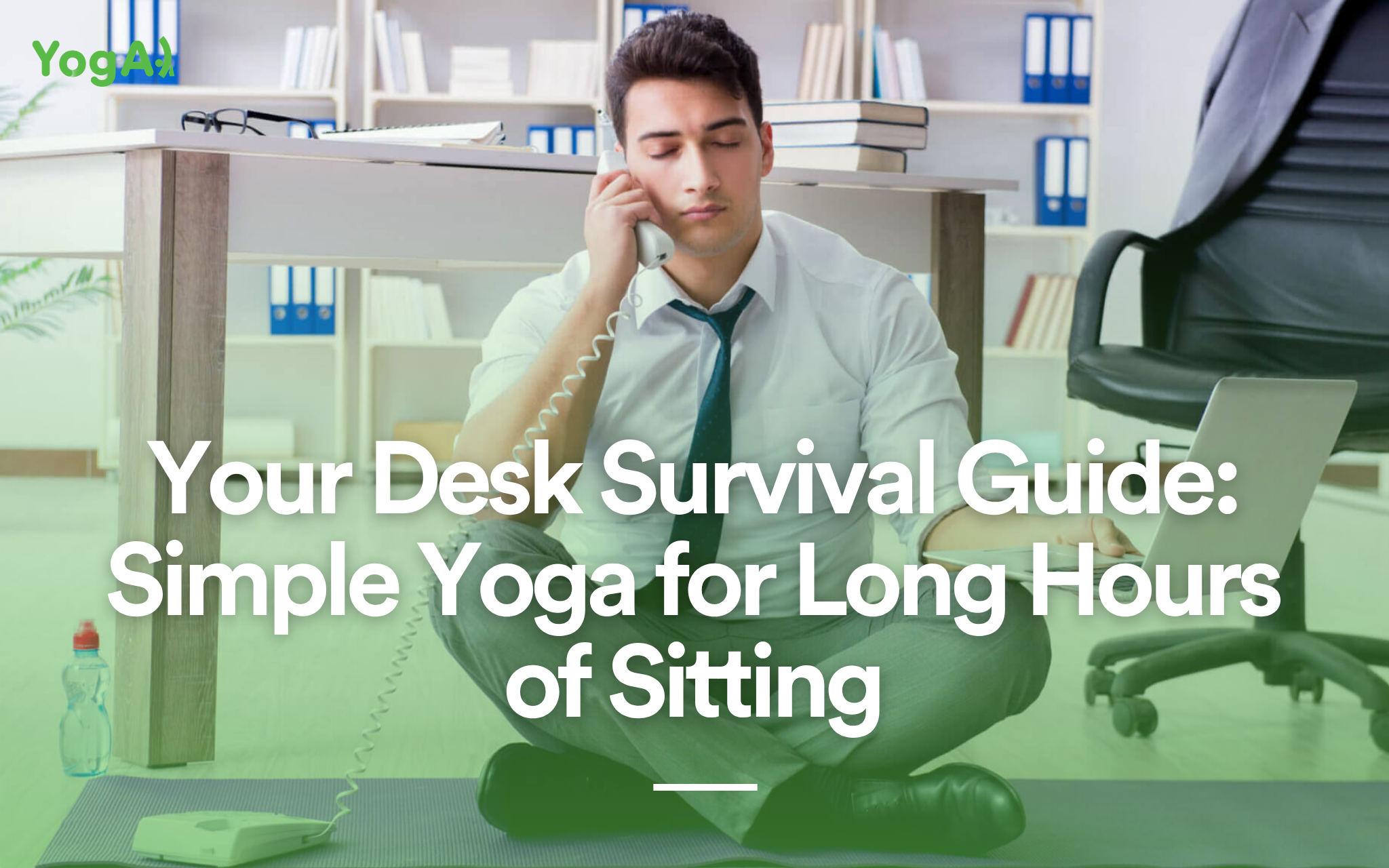
In today’s world, it’s normal to spend most of the day sitting—at your desk, in meetings, or during your commute. While common, this constant sitting is tough on your body. Over time, it can lead to stiffness and poor posture, achy joints, ongoing neck or back pain
These issues often sneak up on you until the pain becomes a real problem.
Yoga: Your Easy Fix for Desk Strain
Yoga offers a proven, gentle way to undo the damage caused by sitting. By bringing natural movement back to your spine and joints, yoga works to prevent and treat discomfort.
The best part? It’s simple, structured, and perfect for everyone, even if you’ve never tried yoga before. You can easily do these exercises at home or right at your office chair.
This guide shares effective yoga moves, blending traditional floor poses with practical chair-based versions you can do without leaving your desk.
Why Sitting Hurts Your Body
Your body is made to move. When you stay seated for too long:
- Your spine gets squeezed and loses its healthy curves.
- Your hips, knees, and ankles become stiff and underused.
- Your neck and shoulder muscles get constantly tense.
- Blood flow to your joints and spinal tissues slows down.
These problems eventually cause poor posture, joint wear, and pain. Regular, simple yoga helps fight these effects by gently moving your spine, refreshing your joints, and bringing balance back to your muscles.
How Yoga Keeps Your Spine and Joints Healthy
Yoga uses slow movements that are coordinated with your breath and respect your body’s limits.
- For your spine: Yoga focuses on gentle stretching, lengthening, bending, and twisting in all directions.
- For your joints: It encourages gentle movement without forcing or straining them.
Whether you’re on a mat or a chair, yoga helps you:
- Relieve pressure on your spine.
- Improve joint movement and flexibility.
- Reduce muscle tiredness.
- Ease neck and back pain from desk work.
Simple Yoga Moves for Desk Workers (Mat and Chair Options)
Here are six easy poses you can use to break up long periods of sitting
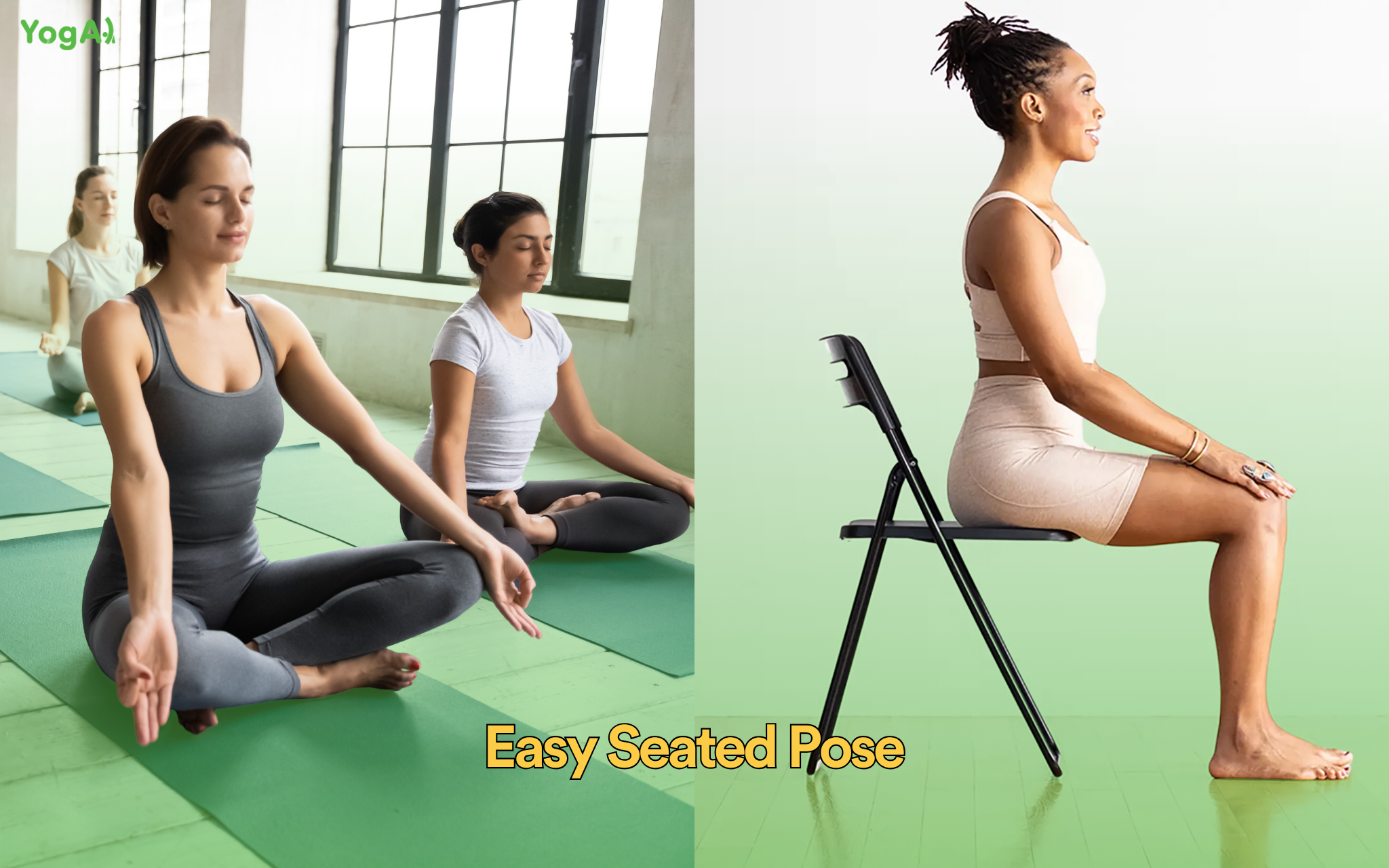
1. Easy Seated Pose (Yogendra Sukhasana)
Goal: Fixes slouching and calms the mind:
- Floor practice: Sit cross-legged comfortably. Hands on thighs, spine straight, shoulders relaxed. Close eyes and breathe naturally.
- Chair adaption: Sit upright on your chair with feet flat on the floor. Don’t lean on the backrest. Hands on thighs, gently lengthen your spine up, focusing on your breath.
2. Adamant Pose (Yogendra Vajrasana)
Goal: Supports spinal alignment and reduces hip/knee stiffness:
- Floor practice: Kneel down and sit back on your heels. Spine straight, hands on thighs. Breathe slowly.
- Chair adaption: Sit upright with your knees bent at 90 degrees and feet flat. Gently press your thighs down, lengthen your spine, and feel stable in your lower body.
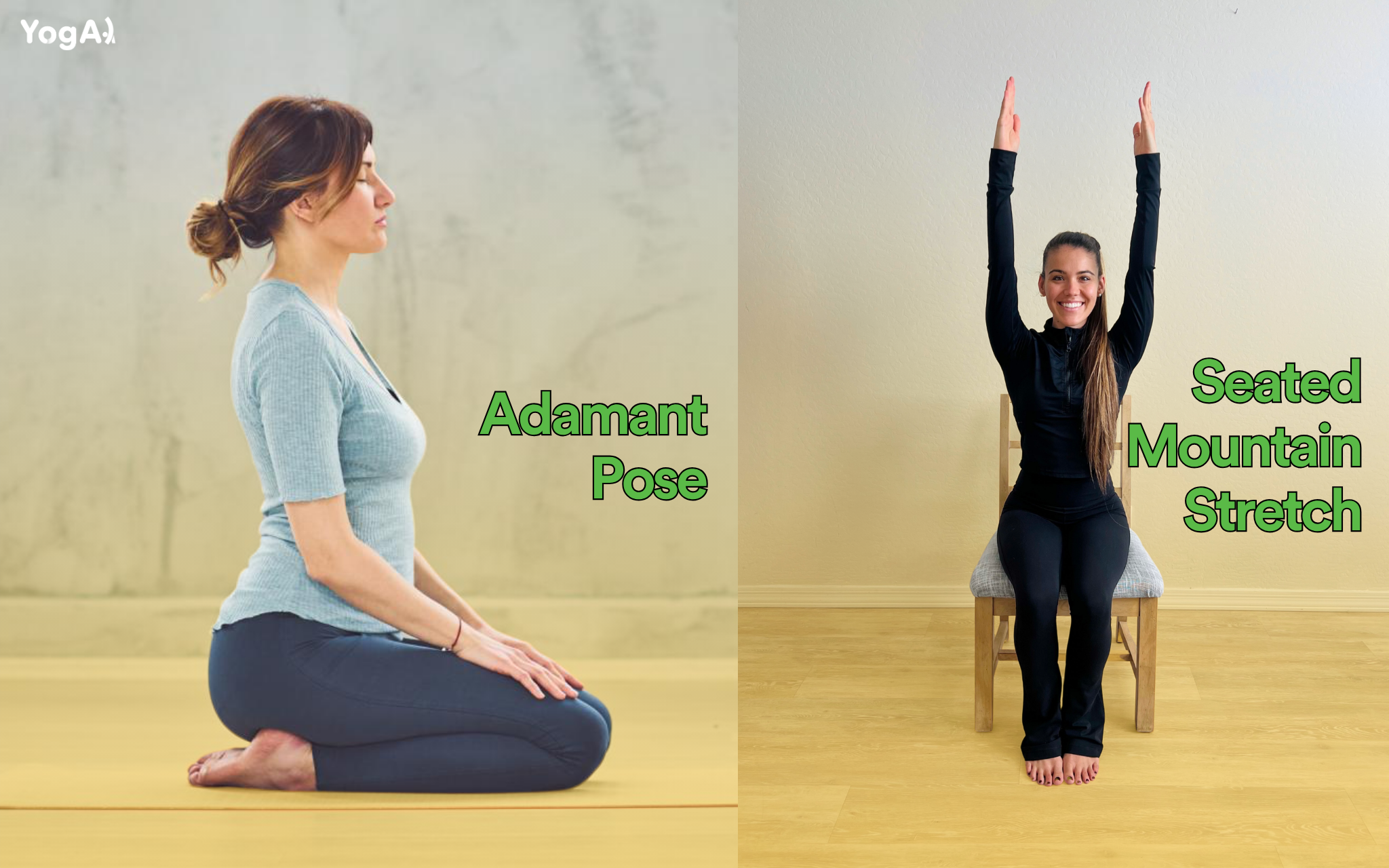
3. Seated Mountain Stretch (Yogendra Parvatasana)
Goal: Gently de-compresses the spine and stretches the shoulders:
- Floor practice: While sitting cross-legged, breathe in and raise both arms overhead. Interlock fingers and turn palms up. Stretch up tall.
- Chair adaption: Sit tall on your chair. Raise both arms overhead with fingers interlocked. Stretch upward as high as you can without lifting your hips off the chair.
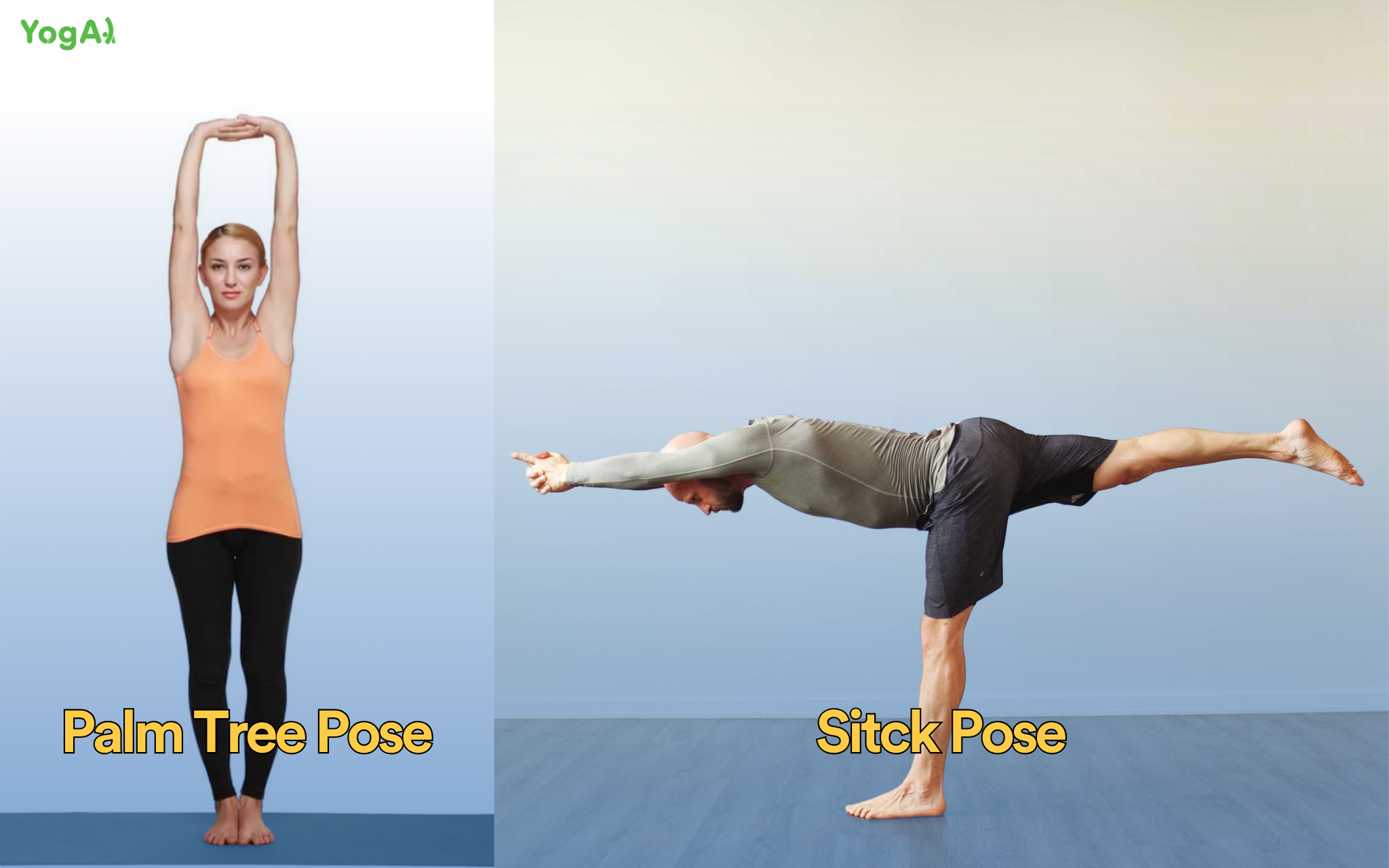
4. Palm Tree Pose (Yogendra Talasana)
Goal: Improves spinal flexibility and eases neck/shoulder tension:
- Floor practice: Stand up. Raise your arms up while lifting your heels, stretching your whole body vertically, and finding your balance.
- Chair adaption: Stay seated with feet grounded. Raise both arms up and lengthen your torso, feeling the stretch along your spine.
5. Stick Pose (Yogendra Yastikasana)
Goal: Gentle full-body stretch, refreshing for the nervous system:
- Floor practice: Lie on your back. As you breathe in, stretch your arms overhead and lengthen your entire body from head to heels.
- Chair adaption: Sit upright. Stretch both arms straight forward, then bring them overhead, while gently pressing your feet into the floor.
6. Cat–Cow Movement (Yogendra Marjaryasana–Bitilasana)
Goal: Restores movement to the spine and eases back/neck pain from desk work:
- Floor practice: Start on your hands and knees (all fours). Breathe in, gently arch your spine. Breathe out, round your spine and tuck your chin. Move slowly with your breath.
- Chair adaption: Sit with hands resting on your thighs. Inhale: Lift your chest and gently arch your back. Exhale: Round your back and drop your chin. Repeat slowly several times.
Your Action Plan for Yoga at Work
- Schedule Breaks: Take a short break every 60–90 minutes.
- Keep it Short: Do 2–3 yoga moves and one breathing exercise for about 5 minutes total.
- Be Gentle: Keep your movements slow and comfortable.
- Stay Aware: Try to keep good posture even after your practice.
- Breathe: Focus on slow, relaxed breathing throughout.
Remember: Doing it consistently is more important than doing it for a long time.
—
You don’t have to accept pain and stiffness from sitting all day. By doing mat-based yoga at home and quick chair-based moves at work, you make self-care practical and easy. These simple, proven techniques can help protect your spine, nourish your joints, and boost your comfort, productivity, and well-being, no matter how long you sit.