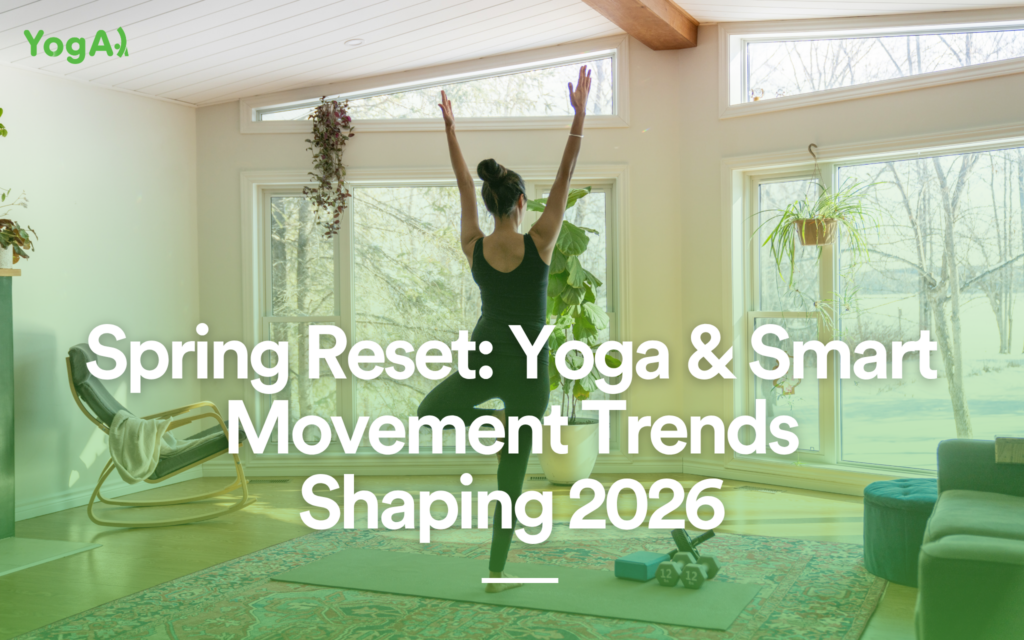
Spring Reset: Yoga & Smart Movement Trends Shaping 2026
Spring is a natural turning point. As daylight increases and routines loosen, many people feel an instinctive desire to refresh — physically, mentally, and emotionally. In 2026, this seasonal reset aligns closely with some of the most transformative trends in yoga and wellness.
After months of winter routines, sedentary habits, and indoor living, spring invites movement that feels lighter, more adaptive, and more connected to daily life. Yoga is no longer about restarting from zero — it’s about evolving your practice to meet where you are now.
From Fixed Programs to Adaptive Yoga Experiences
One of the most significant shifts in 2026 is the rise of adaptive yoga. Traditional programs often follow fixed sequences and schedules, but modern users expect something different — practices that respond to real-time needs.
Energy levels fluctuate. Stress changes day to day. Posture adapts to work patterns, travel, and seasons. Adaptive yoga recognizes this reality by adjusting sessions based on:
- Daily stress and fatigue levels
- Mobility and posture changes
- Seasonal rhythms and lifestyle demands
AI-supported yoga makes this possible by learning from user movement and feedback over time. Instead of repeating the same routine, practitioners receive guidance that evolves — helping them move safely, effectively, and intuitively throughout the season.
Functional Yoga: Moving Better in Everyday Life
Another defining trend shaping yoga in 2026 is the shift toward functional movement. Rather than focusing on aesthetic poses or extreme flexibility, functional yoga prioritizes movement quality that supports everyday life.
This includes:
- Mobility for hips, shoulders, and spine to counter prolonged sitting
- Posture correction for desk work and screen-heavy routines
- Injury prevention through balanced strength, stability, and control
As spring encourages people to become more active — walking more, traveling, or returning to sports — functional yoga provides a foundation that helps the body move efficiently and sustainably.
Yoga becomes less about what it looks like and more about how it supports daily movement.

Blending Environments: From Indoor to Outdoor Practice
Spring also marks a transition in where and how people practice. Indoor routines naturally expand into:
- Outdoor yoga sessions
- Hybrid online–offline practices
- Nature-based wellness experiences
In Canada, in particular, interest in yoga connected to nature continues to grow. Lakeside flows, mountain retreats, forest meditation, and beachside movement experiences are increasingly popular. These environments reinforce the connection between breath, movement, and surroundings — reminding practitioners that wellness extends beyond walls and screens.
Even for those practicing at home or at work, spring inspires lighter, more flexible routines that mirror the season’s sense of renewal.
Technology as a Bridge — Not a Replacement
While technology plays a growing role in wellness, it does not replace yoga’s traditional principles. Instead, it enhances them.
YogAI bridges ancient yoga wisdom with modern insights by helping users:
- Practice with proper alignment and awareness
- Receive real-time feedback to prevent strain
- Stay consistent through adaptable, personalized sessions
Technology becomes a quiet guide — supporting safety, clarity, and confidence without disrupting the essence of yoga itself.
YogAI helps you adapt your yoga practice to seasonal energy, daily posture, and personal goals through AI-powered guidance, real-time feedback, and personalized session recommendations. Whether you’re practicing at home, at work, or on the go, YogAI supports you every step of the way.